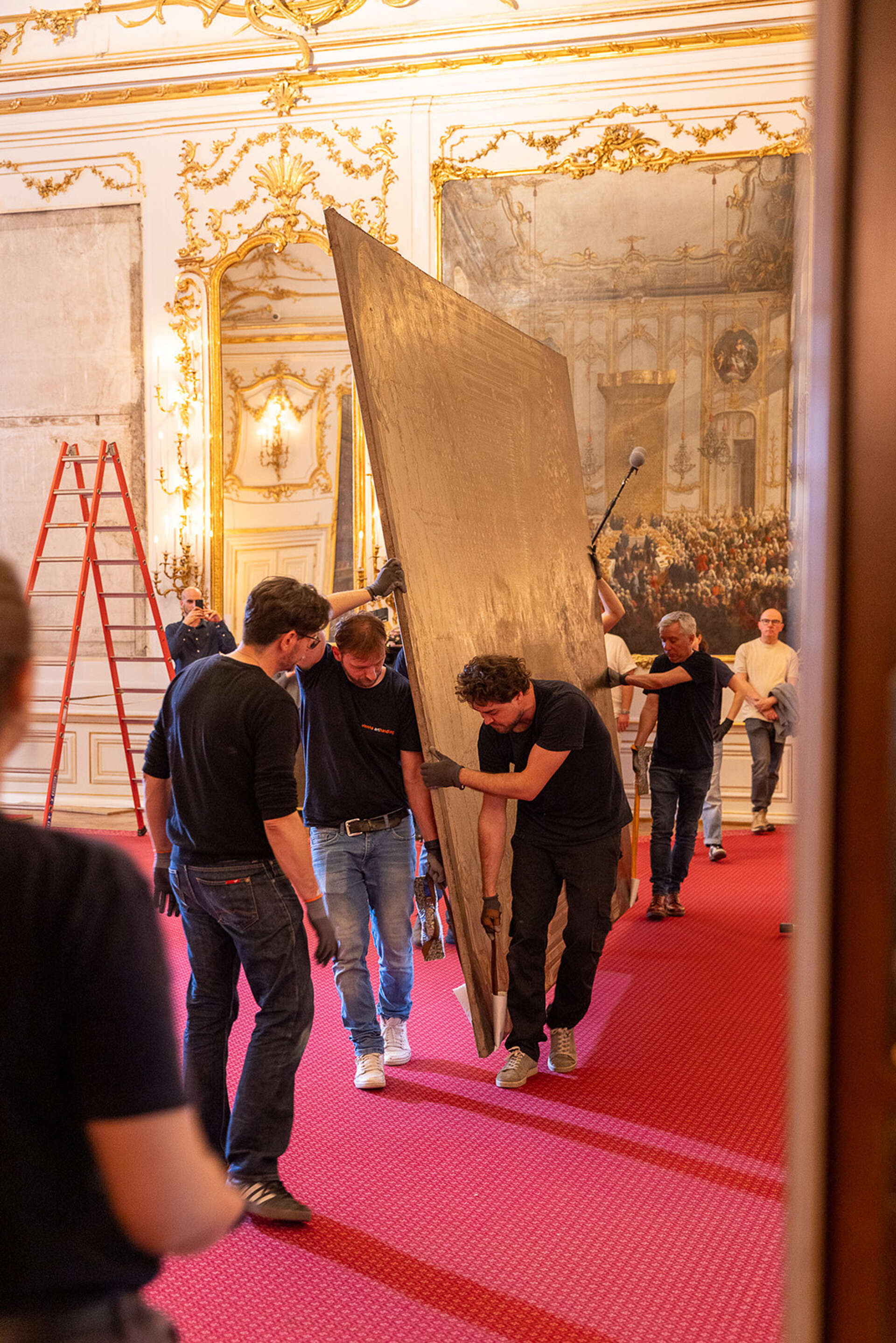
The Hall of Ceremonies is one of the most magnificent rooms at Schönbrunn Palace – richly furnished, historically significant, and during the reign of Maria Theresa the setting for many an official occasion at the imperial court. The splendid centrepiece of the room is the paintings cycle recording the marriage of Archduke Joseph (later Emperor Joseph II) and Princess Isabella of Bourbon-Parma.
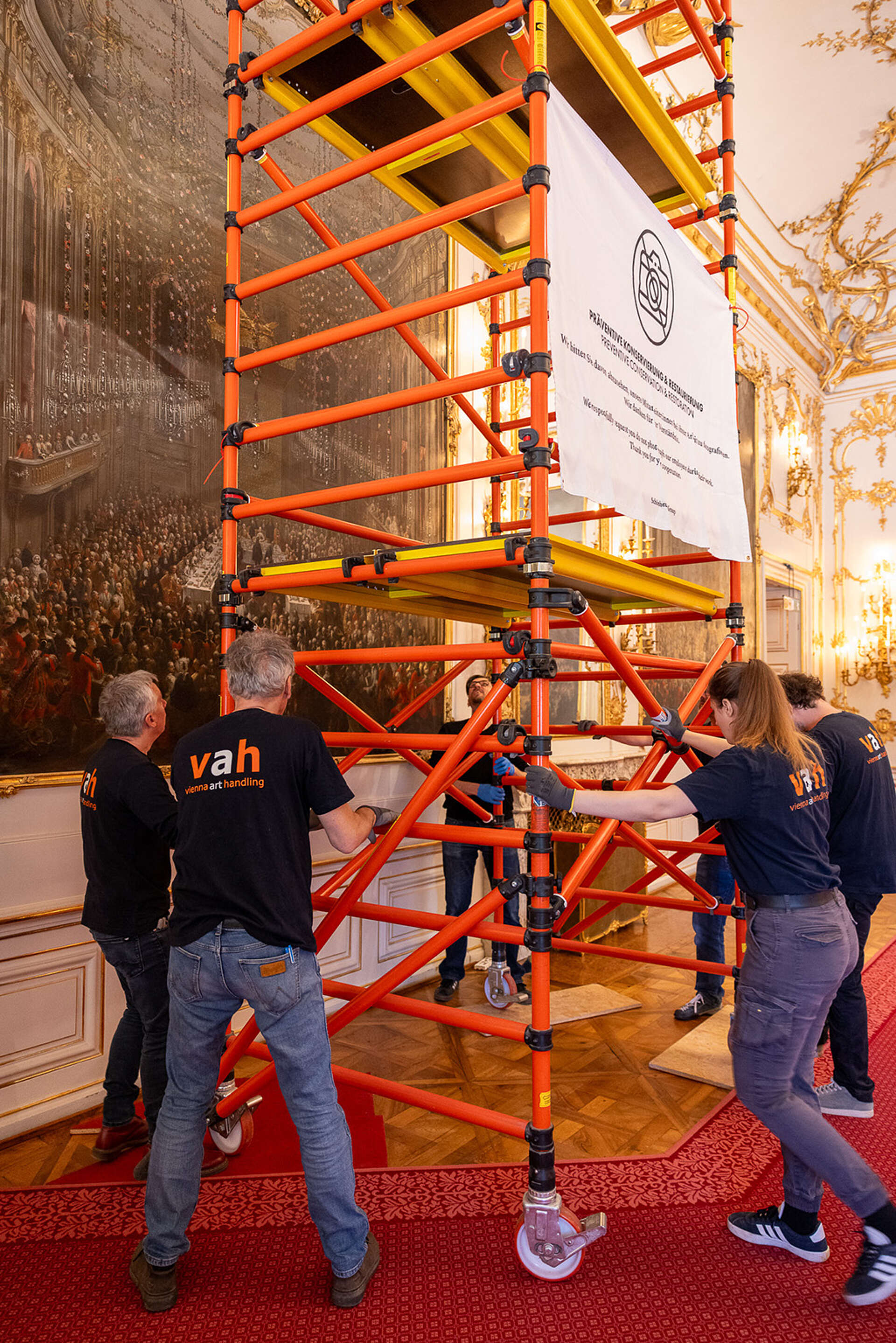
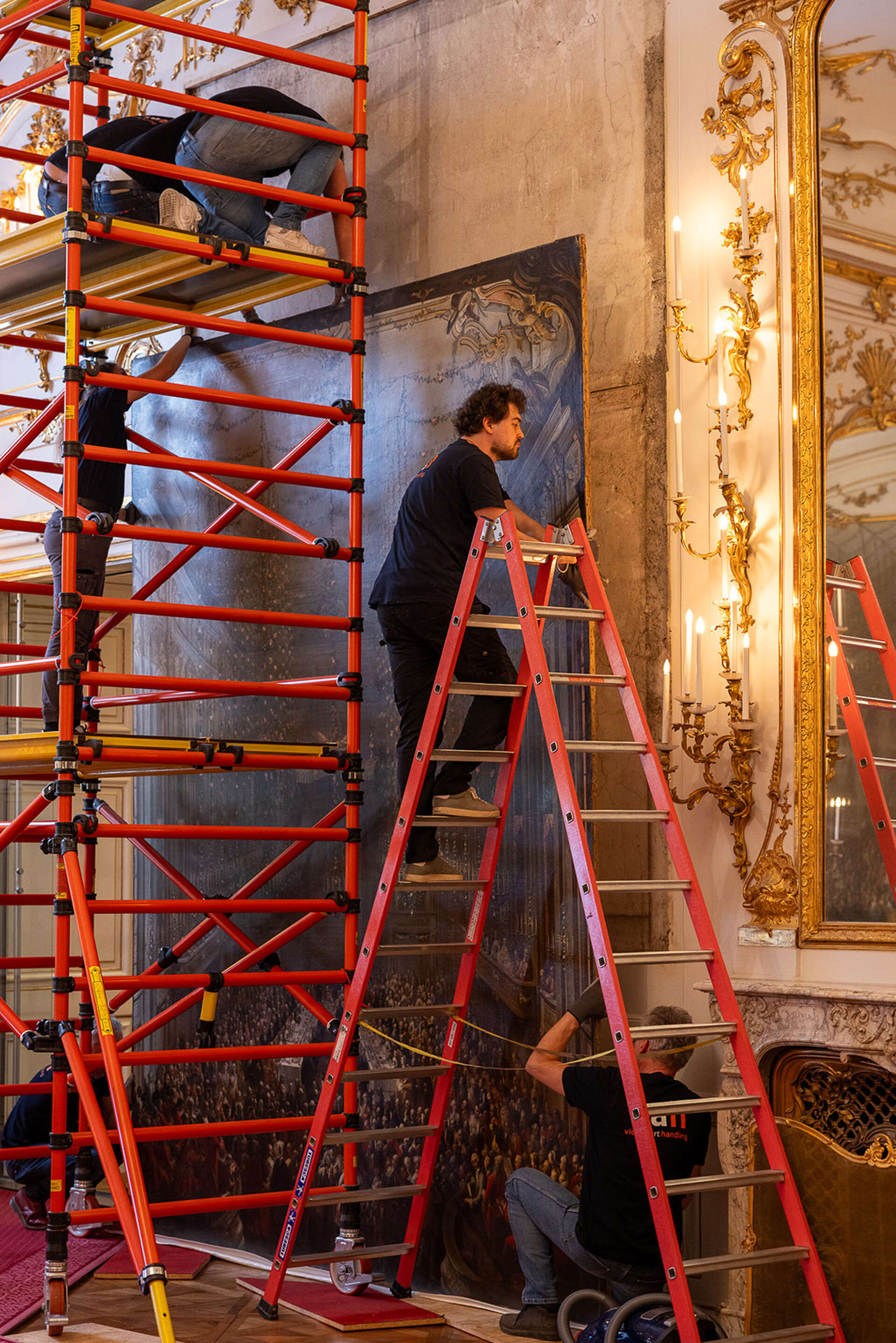
This magnificent room has been undergoing a programme of restoration since 2025. The aim is to secure the long-term existence of the historic furnishings and decoration in all their art-historical and cultural significance in order to preserve them for future generations.
The Hall of ceremonies as a stage of habsburg history
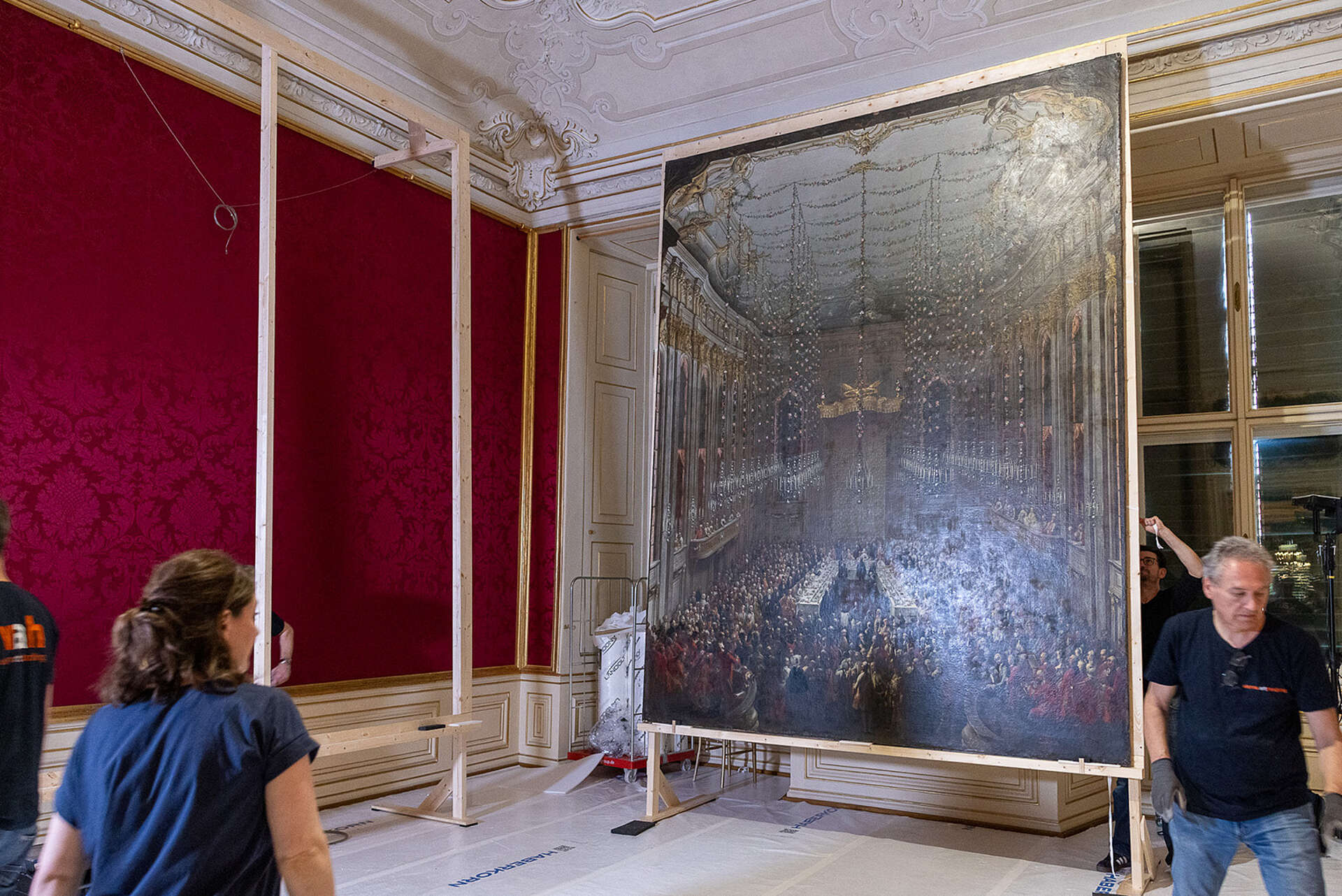
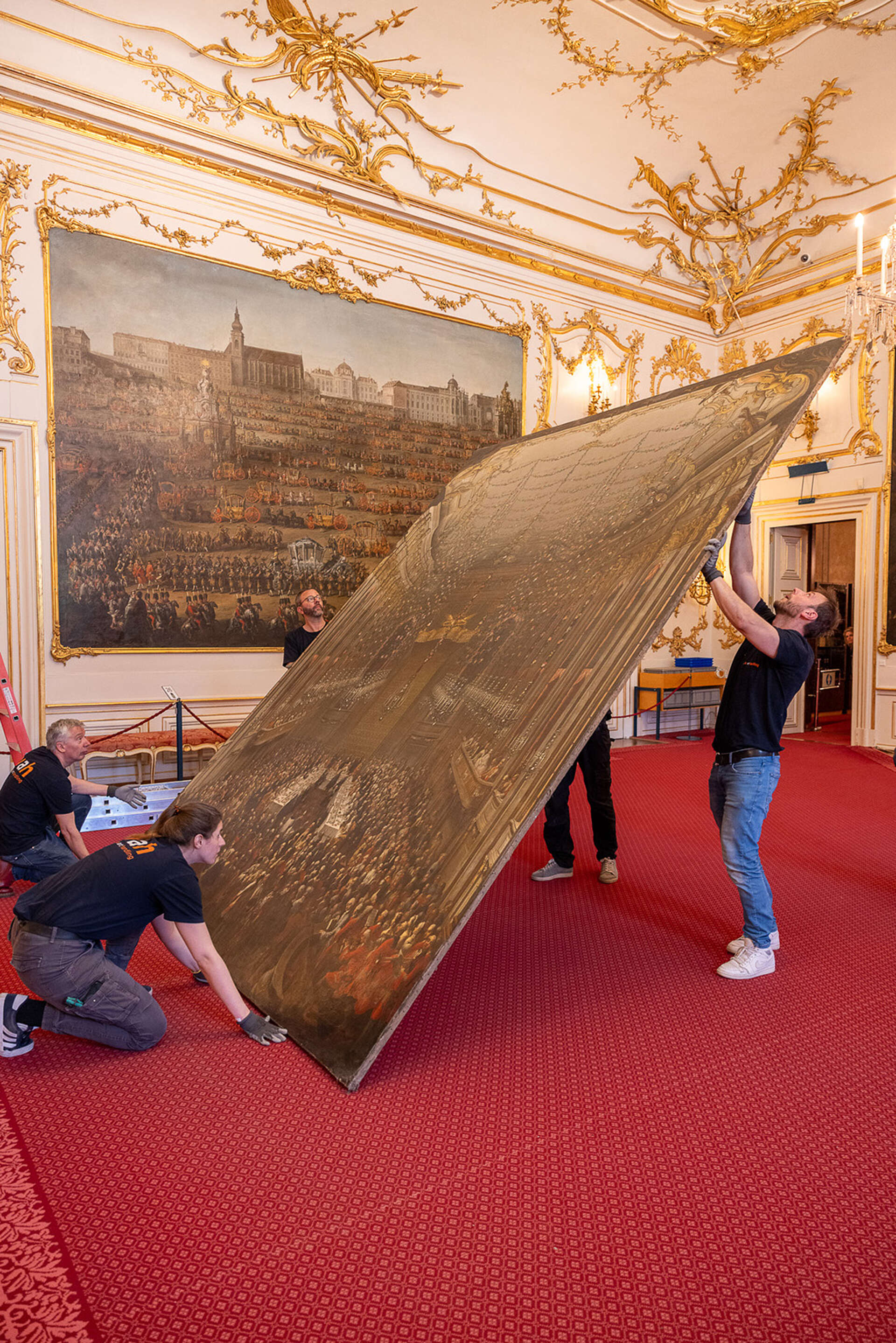
At the court of Maria Theresa, the Hall of Ceremonies served as the Second or Great Antechamber, that is, as the antechamber to the audience chamber of Emperor Franz Stephan. On festive occasions such as baptisms or investitures, a throne canopy was installed in the hall. Today this space is occupied by one of the most famous portraits of Maria Theresa showing her as ‘Europe’s First Lady’ in a sumptuous gown of Brabant lace. The main feature of the room is a series of paintings commemorating the festivities held to mark the marriage of Archduke Joseph and Princess Isabella of Bourbon-Parma, a politically significant alliance between the House of Habsburg-Lorraine and the French royal dynasty.
Restoration of the hall of ceremonies and its furnishings and decoration
Like all the rooms at Schönbrunn, the Hall of Ceremonies can look back on an eventful history in terms of its furnishings, decoration, remodelling and restoration. However, it was the alterations undertaken in the late nineteenth to early twentieth century that proved problematic, compromising its preservation and negatively impacting the appearance of the room. Consequential spalling (surface losses) from the white finish of the walls and from the stucco ceiling constitutes one of the most important reasons for the current programme of restoration.
Thorough investigation was carried out prior to commencement of conservation measures. Analysis of the results formed the basis for developing measures and conservation objectives in close collaboration with the Austrian Federal Monuments Office. Key aspects of these measures are to consolidate the existing fabric, improve its aesthetically impaired visual appearance, and in particular to ensure that future work can be undertaken on the surfaces.
The restoration of the Hall of Ceremonies comprises four main phases:
- restoration of the parquet floor to ensure long-term conservation
- treatment of the spalling and other losses to wall surfaces and gilding
- removal and reinstatement of the recent ceiling surface
- comprehensive restoration of the paintings cycle
The restoration of the paintings is a matter of particular concern since their appearance has been seriously affected by the application of several layers of now-aged varnish, resulting in severely darkened and extremely inhomogeneous surfaces. The paintings also exhibit isolated age-related losses of the paint surface. Earlier restoration interventions have undergone changes over the course of time and have now become more visually apparent.
The current stage of restoration has provided the opportunity to remove the four smaller paintings from the cycle so that they can be worked on in a dedicated temporary studio set up in the Salon of Franz Karl. Owing to its size, the painting set into the north wall depicting the bride’s carriage procession has to remain in situ and will be restored in parallel with the wall surfaces.
Once work has been completed on the wedding cycle, the life-sized portrait of Maria Theresa by Martin van Meytens will also be restored in the temporary studio facilities.
In order to create the best possible conditions for carrying out the restoration of the wall panelling and the ceiling, a ‘room-in-room’ construction will be erected in the Hall of Ceremonies. Challenging in terms of architecture and construction, this solution will continue to allow visitors to pass through the room with no impact on their tour of the palace despite the ongoing conservation work.
The Baroque walnut parquet floor has been dismantled and can thus be restored by wood conservators to ensure maximum preservation of the fabric. The parquet floor will be reinstated once the scaffolding has been taken down.
During the course of 2027 you will be able once again to experience the Hall of Ceremonies in its original appearance.