
Thirty years UNESCO World Heritage Site

A special anniversary year for Schönbrunn

Thirty years ago, Schönbrunn Palace and Gardens and Schönbrunn Zoo were added to the UNESCO World Heritage List. Since then, Schönbrunn has been regarded not only as one of Austria's most important cultural assets, but also as an internationally recognized cultural monument and a popular destination for visitors from all over the world.

This was founded on Austria's commitment to preserving its tangible and intangible cultural heritage: on December 18, 1992, the Republic of Austria signed the UNESCO Convention Concerning the Protection of the World Cultural and Natural Heritage.

At the twentieth session of the UNESCO World Heritage Committee in December 1996, the “Palace and Gardens of Schönbrunn” were added to the World Heritage List. Together with the “Historic Center of the City of Salzburg,” Schönbrunn is thus one of the oldest World Heritage Sites in Austria. The number of World Heritage Sites in Austria has since grown to twelve.

The road to UNESCO World Heritage status

1

The careful maintenance and continuous restoration of Schönbrunn Palace and Park have a long tradition and laid the foundation for the ensemble being declared a UNESCO World Heritage Site in 1996.

1642

1696

1743

1873

1918

1945

1996

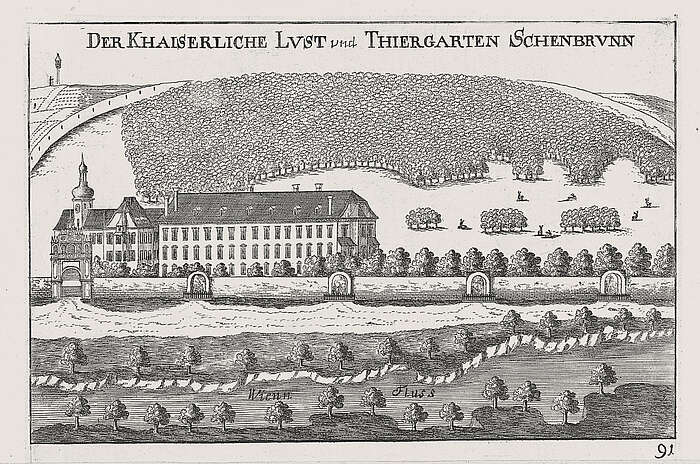
Stich von Tobias Sadeler aus: Georg Matthaeus Vischer, Topographia archiducatus Austriae inferioris, 1672

Owned by the Habsburgs as a hunting ground since the sixteenth century, the “Lusthaus” (pleasure palace) and gardens are referred to as Schönbrunn for the first time in historical sources. As the summer residence of several art-loving empress dowagers, Schönbrunn was a center of cultural life at the early Baroque court of Vienna.

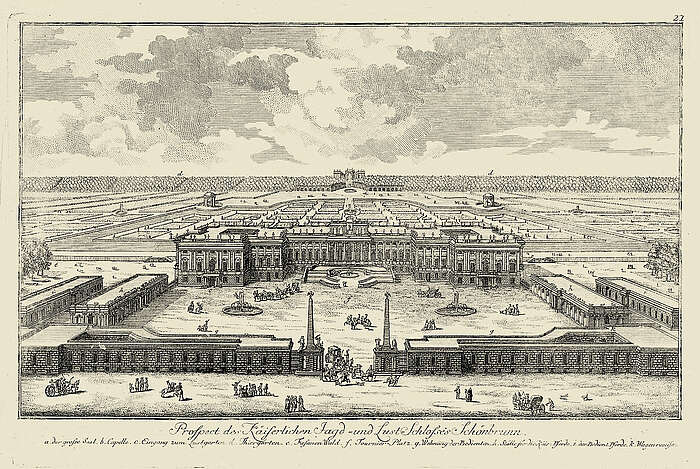
Prospect des Kaiserlichen Jagd- und Lustschlosses Schönbrunn“  Kupferstich nach einer Vorlage von Johann Bernhard Fischer von Erlach

Construction begins on the palace, based on plans by Baroque architect Johann Bernhard Fischer von Erlach, and its basic structure remains unchanged to this day. However, the ambitious project remains unfinished for the time being.

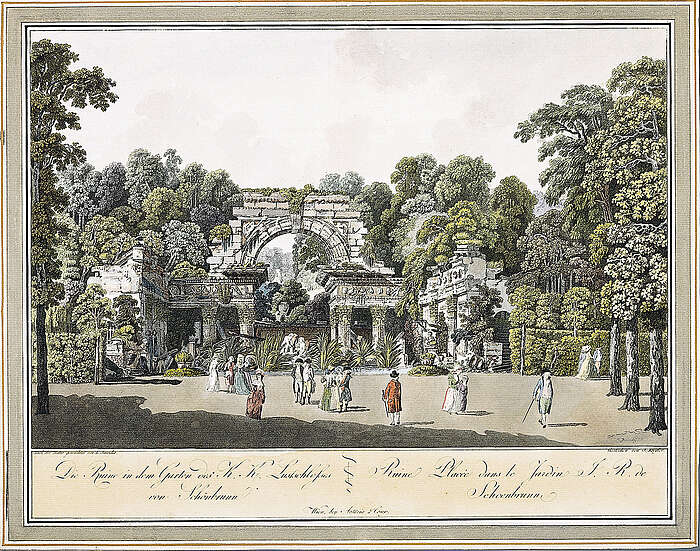
Die Ruine in dem Garten des K. K. Lustschlosses von Schönbrunn

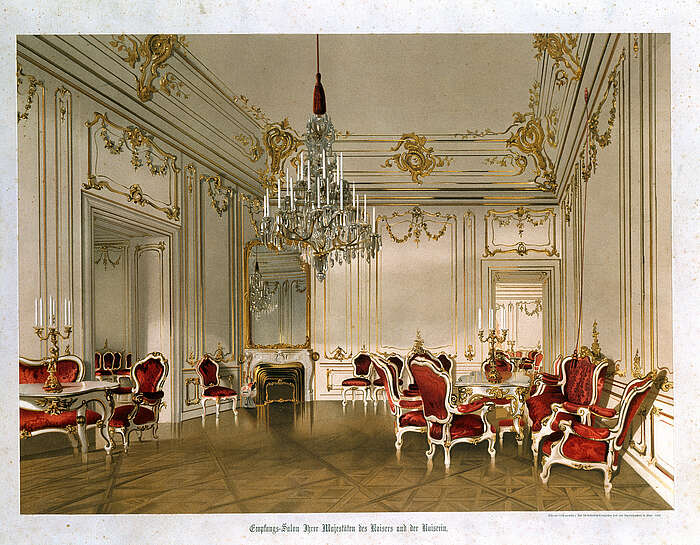
Start of the expansion into a summer residence under Maria Theresa. The elements of the palace and gardens that still characterize them today date from the reign of this important monarch, which lasted from 1740 to 1780. In 1778, the palace park was opened to the public.

Empfangssalon Ihrer Majestäten des Kaisers und der Kaiserin

During the Vienna World's Fair, the state rooms of the palace are opened to the public after extensive restoration work. The condition of the complex under Emperor Franz Joseph (1848 to 1916) is considered the binding benchmark for monument preservation measures.

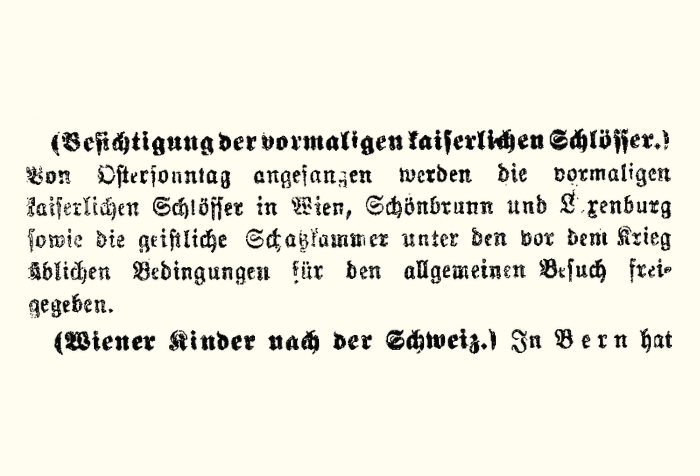
Notiz betreffend die Öffnung der kaiserlichen Schlösser für die allgemeine Besichtigung beginnend mit Ostersonntag, dem 20. April 1919

After the end of the monarchy, the Republic of Austria takes over the palace and park and thus responsibility for the care, maintenance, and administration of the ensemble.

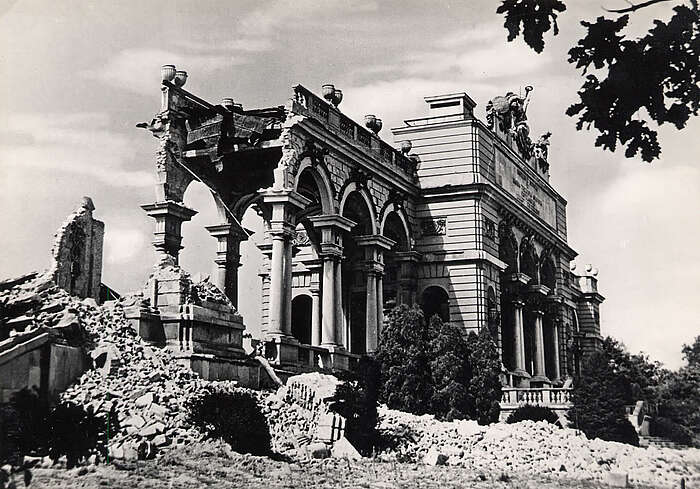
Kriegsschäden an der Gloriette

World War II leaves behind destruction that is repaired in the following years. Over the course of the twentieth century, Schönbrunn develops into one of Vienna's most important tourist attractions.

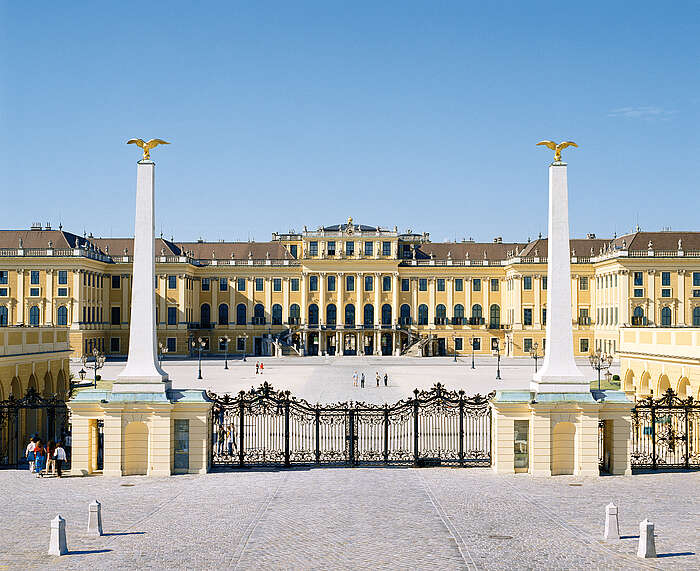
Haupttor Schloss Schönbrunn, aktuelle Situation

Schönbrunn Palace and Gardens are added to the UNESCO World Heritage List. This distinction also comes with an obligation to protect the historic complex despite its intensive use and to preserve it for future generations.

Key criteria for Schönbrunn World Heritage Site

2

Inclusion in the UNESCO World Heritage List requires proof of “Outstanding Universal Value” (OUV). This describes why a site is of particular importance to all of humanity and therefore worthy of protection and preservation. Schönbrunn fulfills four of the ten UNESCO criteria that distinguish the ensemble as an outstanding cultural monument of global significance.

A Synthesis of the Arts: Palace and Gardens

The palace and gardens of Schönbrunn are among the most impressive and best-preserved Baroque ensembles in Europe. The symmetrical layout and design of the gardens are inextricably linked to the palace building. They are an outstanding example of a Baroque complex in which a multitude of artistic forms merge masterfully—a unique combination of art and nature.

Prestigious summer residence

Schönbrunn Palace and its extensive outbuildings are the epitome of an imperial residence that had to meet many requirements: the palace provided for a prestigious court in magnificently furnished halls as well as comfortable living quarters for the imperial family, while the side wings housed service and administrative rooms and quarters for the court staff.

Schönbrunn's Baroque garden design

The structure of the 18th-century gardens has remained virtually untouched and has undergone minor changes only in later times. Integral parts of the Baroque design are all areas of the gardens, including the menagerie founded in 1752, the fountains, sculptures, monuments, and garden buildings. The visual references to Schönbrunn's surroundings must also be taken into account.

Change of ruling generations

Schönbrunn stands as a compelling symbol of the power and influence of the House of Habsburg-Lorraine over a significant period of European history from the end of the seventeenth to the early twentieth century. In line with the changing needs and tastes of different generations, the palace, its interior decoration, and the palace park also underwent changes, but the overall Baroque character was always preserved.

The people behind the World Heritage Site

3

To mark this anniversary year, the spotlight is being directed onto the people behind this success, and the tasks they accomplish every day. Remarkable work is being done, particularly in the key area of preventive conservation and restoration of the historic complex.

For example, the ceremonial hall measuring 191 m² is currently being restored under the direction of the scientific department. The construction department oversaw the restoration of the Chinese cabinets and the restoration of the Gloriette façade. We provide an inside view of this work on our social media channels.

Being a World Heritage Site is both an honor and a responsibility. We preserve this unique ensemble with the utmost sensitivity for its historical substance and, at the same time, develop it with full responsibility so that Schönbrunn can be preserved and experienced by future generations.

Klaus Panholzer, CEO of Schönbrunn Group

UNESCO World Heritage Day 2026

4
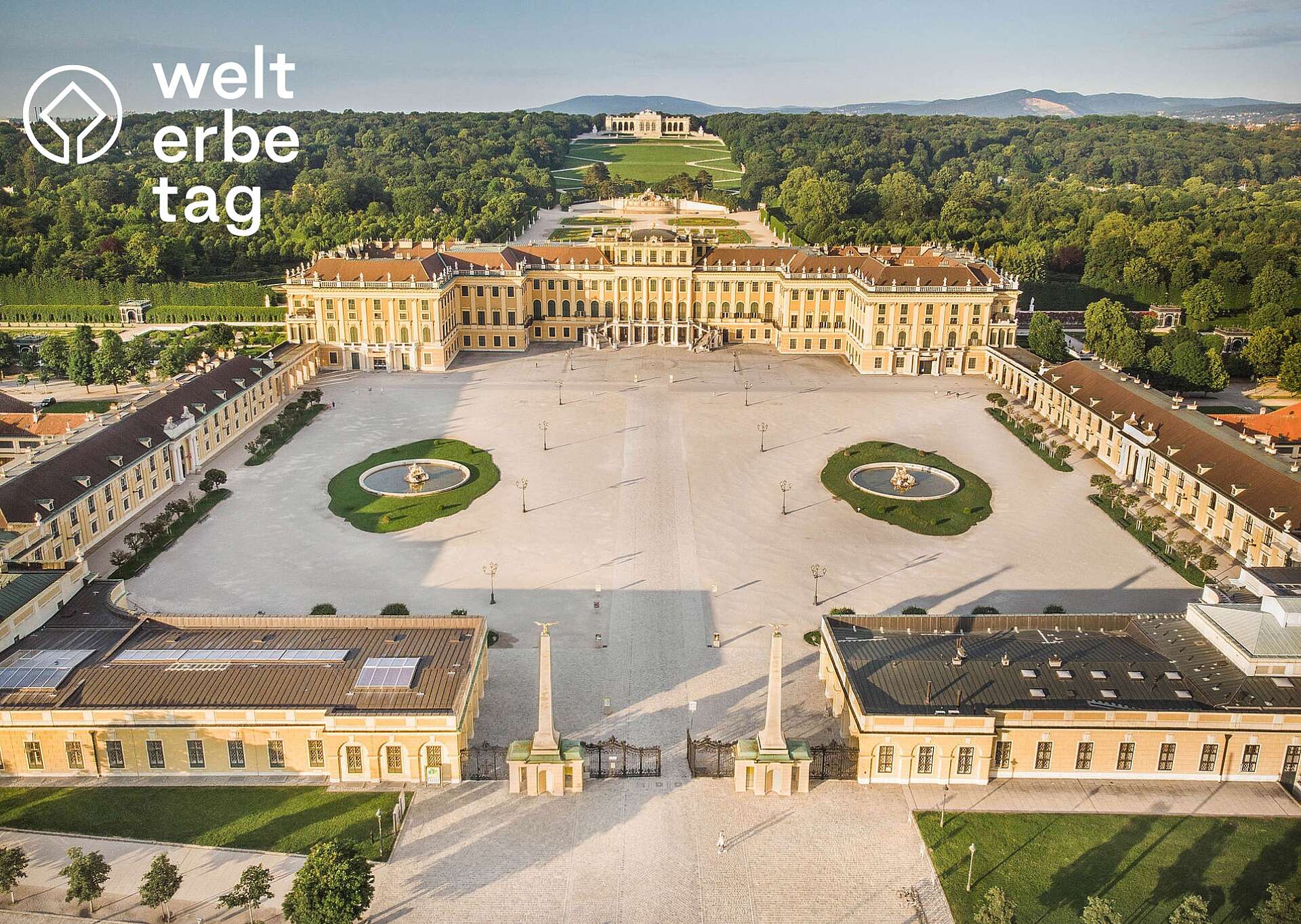
Blick von oben auf Schloss Schönbrunn mit Welterbelogo links oben

On April 18, 2026, we shall be celebrating Austria's world heritage sites—including the unique Schönbrunn Palace. The Schönbrunn Group is marking this year's thirtieth anniversary as a UNESCO World Heritage Site with two exclusive tours outside regular opening hours, focusing on exceptional rooms in the palace. The link for registration will follow shortly.

These are very diverse but authentically preserved interiors that bear essential witness to past ways of life and at the same time document the artistry and craftsmanship of bygone eras. Empress Maria Theresa was particularly influential, making Schönbrunn her central residence and exerting a decisive influence on its design. Her political and cultural ambitions made Schönbrunn an important center of power and life for the Habsburgs.

Starting April 10, you can also look forward to exciting content on our social media channels Facebook and Instagram, which will bring the extraordinary universal value of the Schönbrunn World Heritage Site to life.

Sustainable management of world heritage

Learn more about the protection and sustainable management of world heritage.

Learn more
Schönbrunn Palace Mobile App

Schönbrunn

Mobile App